
For too long, video games were often dismissed as a trivial time-sink—a passive distraction from more “productive” pursuits. However, in the modern era, scientific research and widespread personal experience have shattered this stereotype. Playing games in your free time, when approached mindfully and in moderation, is not merely an escape; it is a highly engaging activity that offers profound, measurable benefits spanning cognitive function, emotional health, and social connectivity. The interactive nature of modern gaming, from complex strategy titles to fast-paced competitive shooters, transforms leisure into a powerful tool for self-improvement and well-being.
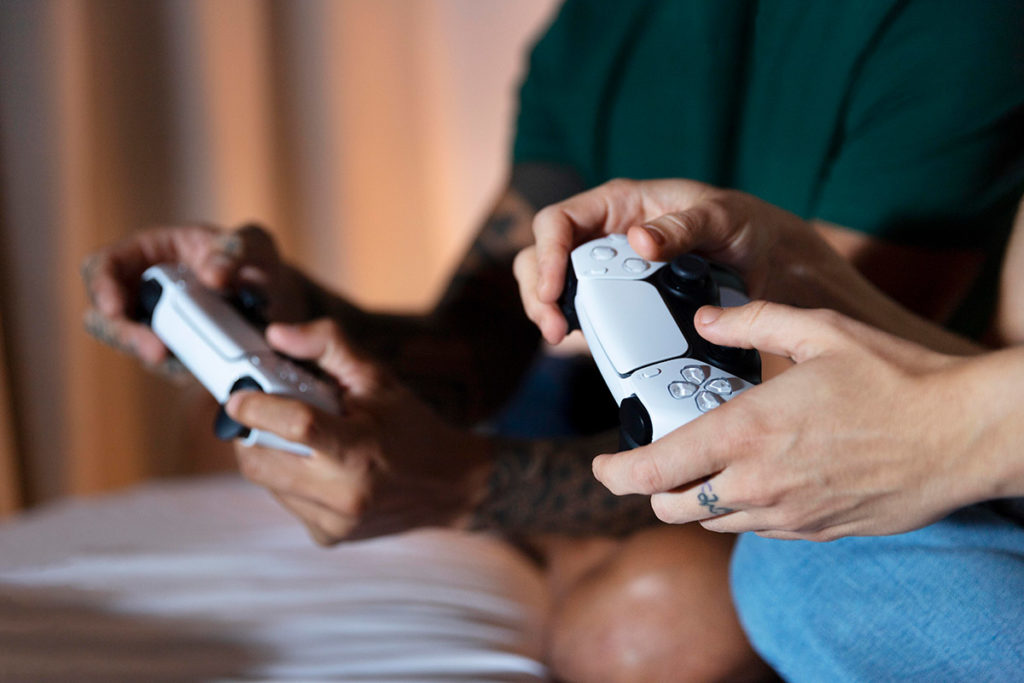
This article delves into the substantial and often surprising benefits of playing games during free time, highlighting why gaming deserves recognition as a valuable, life-enhancing activity.
Pillar I: Cognitive Enhancement and Problem Solving
Gaming is a workout for the brain. It demands intense concentration, rapid decision-making, and the synthesis of complex information under pressure.
1. Sharpening Executive Functions
Games, especially strategy and real-time tactical titles (like StarCraft or League of Legends), require players to juggle multiple tasks simultaneously, a process known as split-attention.
- Improved Focus and Multitasking: Players must track enemies, manage resources, monitor mini-maps, and communicate with teammates—all at once. This practice strengthens executive functions, which include working memory, task prioritization, and sustained focus, skills that directly transfer to academic and professional environments.
- Faster Decision-Making: In competitive games, players must analyze rapidly changing scenarios and execute a move in milliseconds. Research has shown that gamers often exhibit faster and more accurate decision-making abilities compared to non-gamers, without sacrificing accuracy.
2. Boosting Spatial Reasoning and Problem Solving
Complex 3D games and puzzle titles are powerful tools for developing spatial cognition.
- Mental Rotation and Visualization: Games like Portal or deep-seated exploration RPGs require players to mentally rotate objects and visualize solutions in three-dimensional space. This enhances spatial reasoning, a skill correlated with success in science, technology, engineering, and mathematics (STEM) fields.
- Abstract Thinking: Strategy and puzzle games train the brain to recognize patterns, formulate hypotheses, and test solutions systematically—the very definition of applied problem-solving.
Pillar II: Emotional Regulation and Stress Relief
Beyond the mental benefits, gaming serves a crucial role in managing emotional health and providing a constructive outlet for stress.
3. Healthy Stress Reduction and Escape
Gaming provides a controlled environment where individuals can safely experience challenges and setbacks, offering a form of psychological decompression.
- Stress Management: Immersing oneself in a game world offers a temporary, engaging escape from real-world anxieties. The ability to successfully overcome a virtual challenge provides a sense of accomplishment and control, which can be cathartic.
- Resilience Building: The nature of most games—failing, learning, and trying again—instills a powerful lesson in resilience. Gamers learn to tolerate failure, analyze mistakes objectively, and adapt their strategies, a crucial mindset for overcoming real-life obstacles.
4. Fostering Positive Emotional States
The feeling of mastery, often referred to as “flow,” is a powerful positive emotional state frequently achieved during gaming.
- Achieving Flow: When skill level perfectly matches the challenge level in a game, players enter a state of total immersion and energized focus. This flow state is deeply satisfying and linked to increased motivation and a sense of well-being.
Pillar III: Social Connection and Pro-Social Behavior
Modern gaming is overwhelmingly social, providing unique and important avenues for connection and collaborative skill development.
5. Building Global Communities
Multiplayer games facilitate global connections, allowing individuals to form friendships and collaborative teams regardless of geographical location.
- Teamwork and Communication: Success in team-based games (MOBAs, co-op shooters) hinges on effective communication, coordination, and leadership. Players learn to rapidly articulate strategy, delegate roles, and manage group dynamics—soft skills that are highly valued in any team environment.
- Inclusivity: Gaming platforms provide inclusive environments where physical limitations or social anxieties may be minimized, allowing individuals to connect based purely on shared interests and skills.
6. Cross-Cultural Understanding
Playing with diverse people from around the world exposes gamers to different communication styles, cultural perspectives, and problem-solving approaches, fostering a greater degree of cross-cultural awareness.
Conclusion: A Valued Form of Leisure
The benefits of playing games in one’s free time are diverse and undeniable. From sharpening cognitive functions like focus and decision-making to providing healthy emotional regulation and fostering global social connections, mindful gaming is a valuable activity.
By embracing the interactive complexity of modern games, individuals can leverage their leisure time not just for fun, but for profound, measurable self-improvement, cementing gaming’s place as a beneficial and legitimate pursuit.